What a cover letter template should actually do
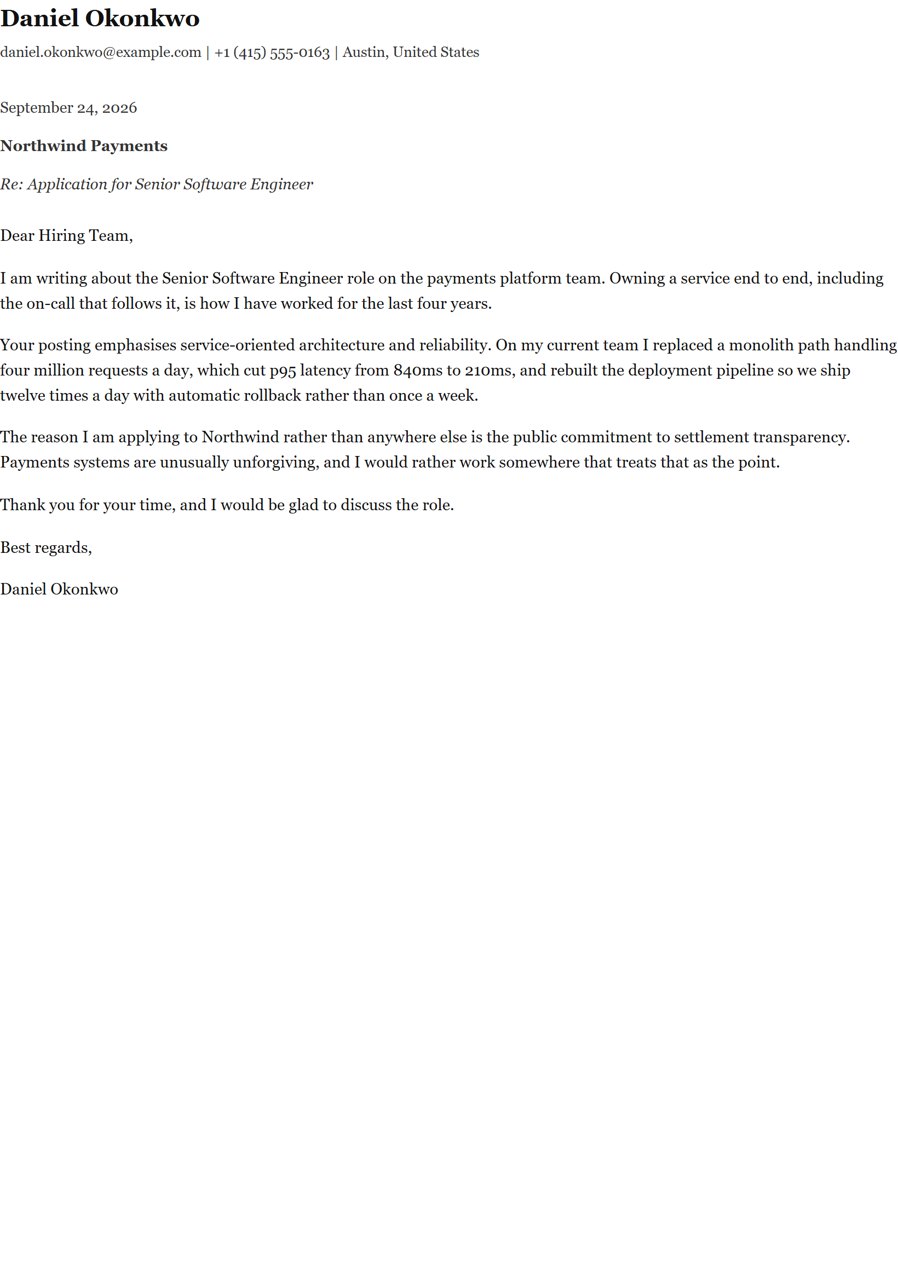
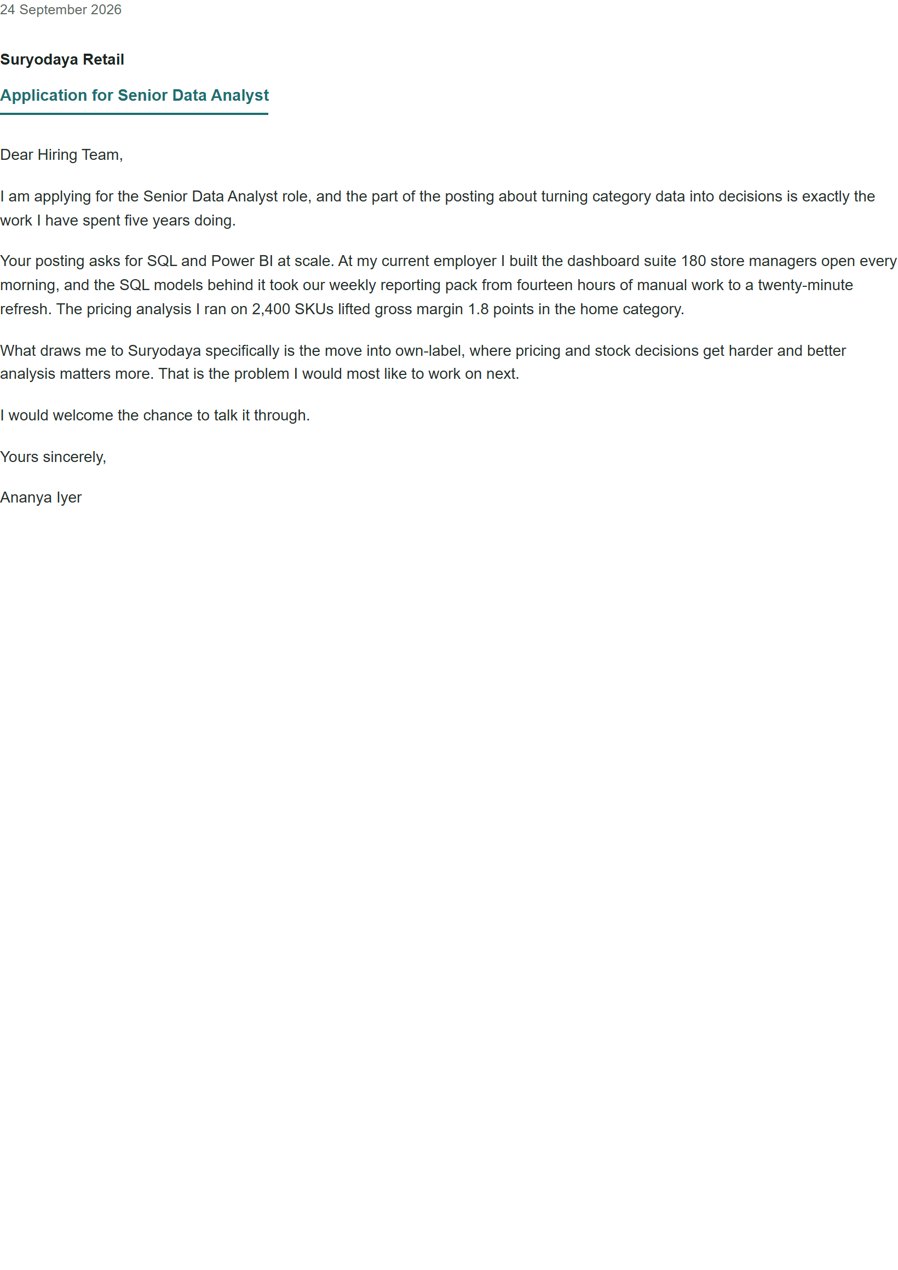
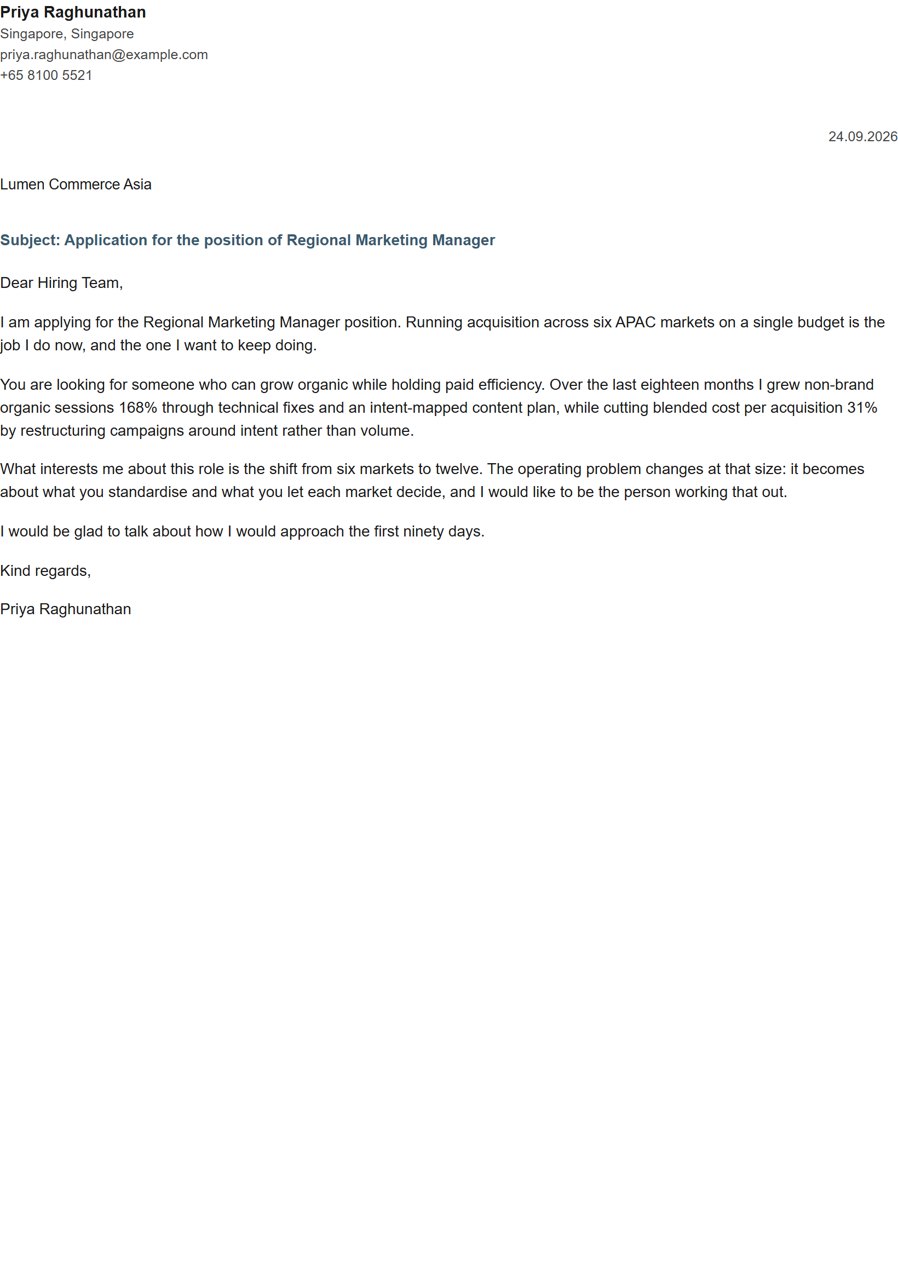
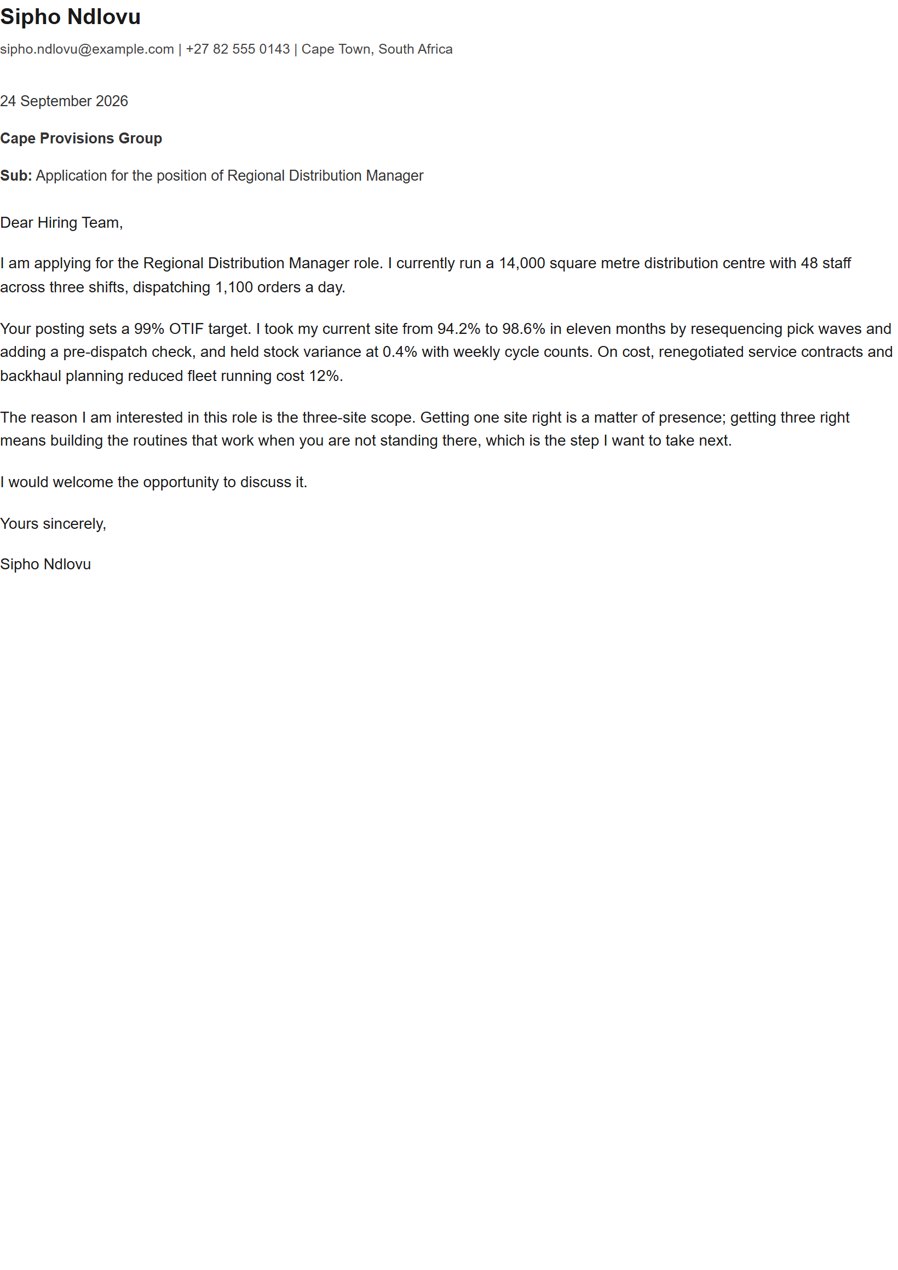
A template's job is to get the layout out of your way: your details where a reader expects them, the role named at the top, and four paragraphs with room to breathe. What decides whether the letter works is the writing, and the same four-part structure sits behind every letter on this page.
| Paragraph | Length | Its one job |
|---|---|---|
| The hook | 2 sentences | Name the role and one real reason you fit |
| Why you | 3–4 sentences | One requirement from the posting, plus a result you got |
| Why them | 2–3 sentences | Something specific about the company, tied to what you bring |
| The close | 1–2 sentences | Thank them and sign off, without pleading |
Read the letters above with that structure in mind and you can see it: each opens by naming the role, spends its middle on one requirement with a number attached, and says something about the employer that could not be copied to another application. The full walkthrough is in how to write a cover letter in 10 minutes, and whether to write one at all is worth two minutes before you start.
Or let the first draft write itself.
Paste the job description and DraftCareer drafts the letter from your own profile, in the structure above, for you to edit. Start free — and it never sends the wrong company name, which is the most common cover letter mistake there is.
Frequently asked questions
Are these cover letter templates free?
The four PDFs on this page are free to download and use as a starting point. Writing your own in DraftCareer is free on the free plan; the AI draft and unlimited downloads are on the paid plan.
What should a cover letter template include?
Your name and contact details, the company and role, a subject or greeting line, four short paragraphs, and a sign-off. Anything more — columns, photos, graphics — makes it harder to read and adds nothing.
How long should a cover letter be?
Under 250 words, on one page, in four paragraphs. Every letter on this page follows that.
Should the cover letter match my resume design?
It helps, and every template here has a matching resume template, but it matters far less than what the letter says. A plain letter with a specific second paragraph beats a beautifully matched one full of generalities.
Can I use the same cover letter for every application?
Reuse the structure, not the text. The opening and the paragraph about the company have to change each time, which is about ten minutes of work.
Do I need a cover letter if the application says optional?
Write one when you have something the resume cannot say: a career change, a gap, a referral, a specific reason for this employer. For a routine application through a large portal, tailoring the resume is usually the better use of the time.